One Piece TCG Colors Explained: Which Color Should You Play?

If you're coming from another card game, the color identities of the One Piece Card Game may not seem very intuitive. Even in archetypes that seem similar to ones you've played before (e.g. ramp, swarm, freeze), the feeling of actually playing the deck will likely deviate drastically from what you're used to.
Even within the colors, sometimes play styles can vary so drastically that playing a deck of one color can feel like playing a deck of another color. When you take multi-color Leaders into consideration, color archetypes start feeling not-very-useful at all.
That being said, the highest-level mechanics of every color do tend to stay relatively consistent across the game. If certain mechanics speak to you more than others (many players hate trigger effects and refuse to play yellow, for instance), here's a comprehensive primer on the mechanics that define every color in One Piece.
Red: Rush and Power Manipulation
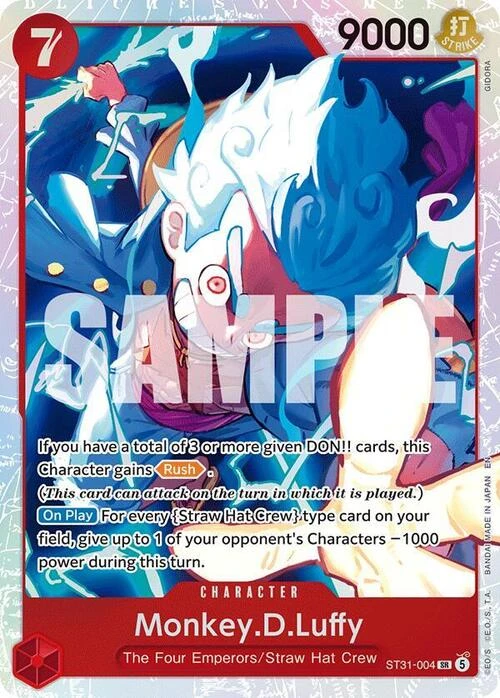
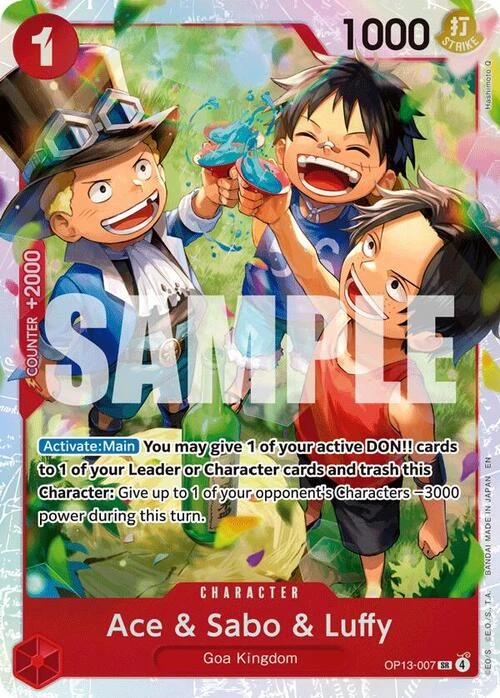
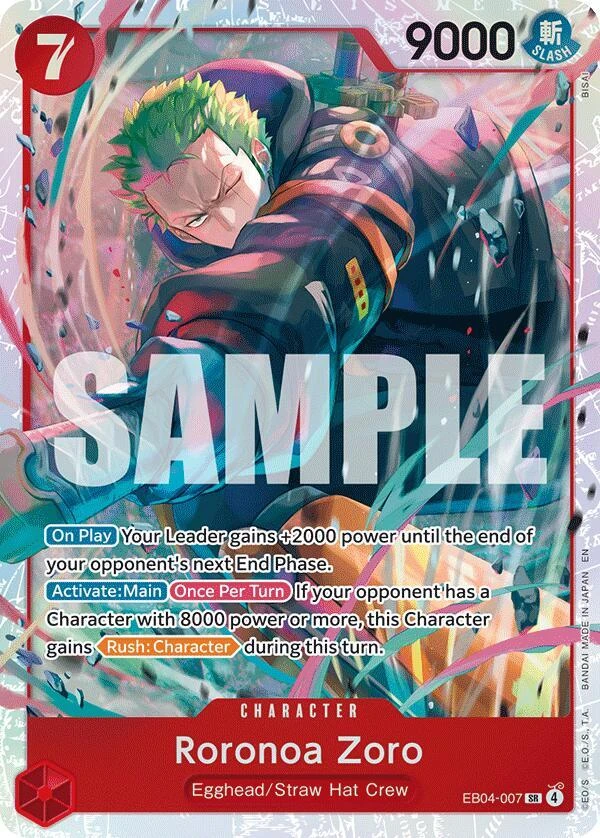
Red is the color of the Rush mechanic and power buffs and debuffs. While it's often associated with aggressive play, that's not always the case, as many red Leaders use Rush and power buffing to survive, control the board, or close out games.
- Main Mechanics:
- Rush. Characters that can attack the turn they are played.
- Power Reduction. Lowering an opponent's Character's power (e.g., -2000 Power) to reduce their threat level or make them easier to attack/remove.
- Stat Buffs. Giving your Leader or Characters power boosts for one turn.
- Style:
- Consistent pressure. Red puts constant pressure on the opponent's Life total. It forces the opponent to discard cards from their hand throughout the game, leaving them with fewer options in the late game.
- Recommended if you like:
- Fast games, attacking constantly, and buffing or debuffing Characters.
- Don't play if you dislike:
- Precision gameplay. Since red often wants to win as quickly as possible, red players need to understand combat mechanics inside and out to squeeze out wins. The margins are razor-thin, but this can be one of the most rewarding styles in the game for pilots who know their stuff.
- Example Leader: OP16-001 Portgas.D.Ace.
Ace uses his ability to create tremendous pressure in the late game, buffing his own Leader power while tossing huge attacks at the opponent's Leader.
Green: Rest, Restand, and Freeze
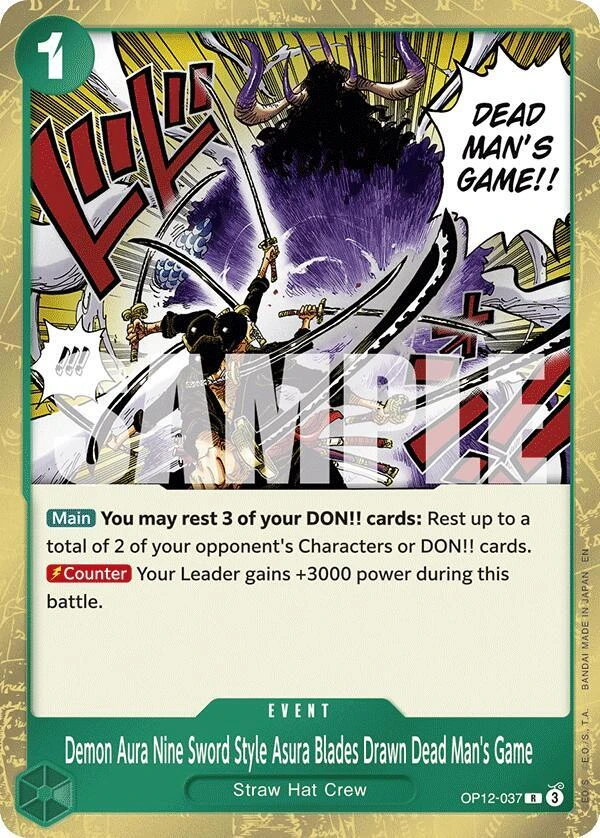
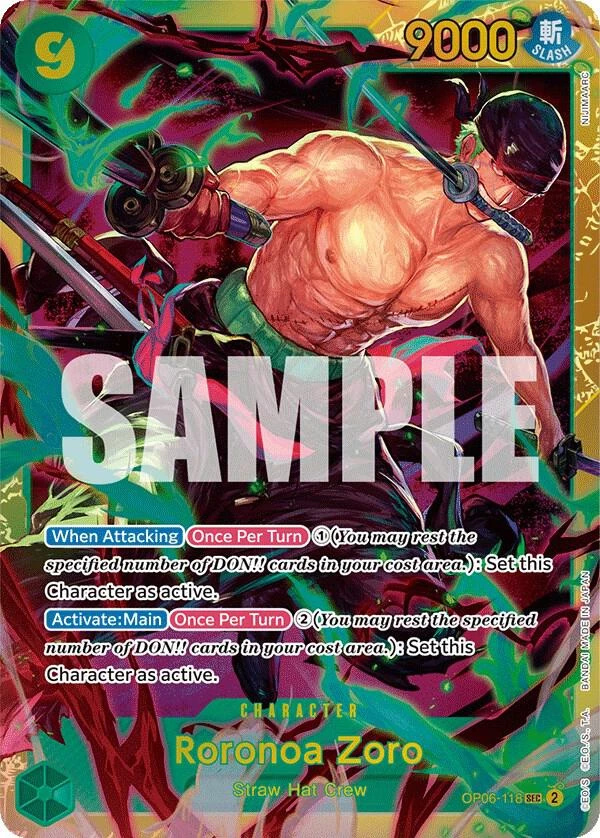
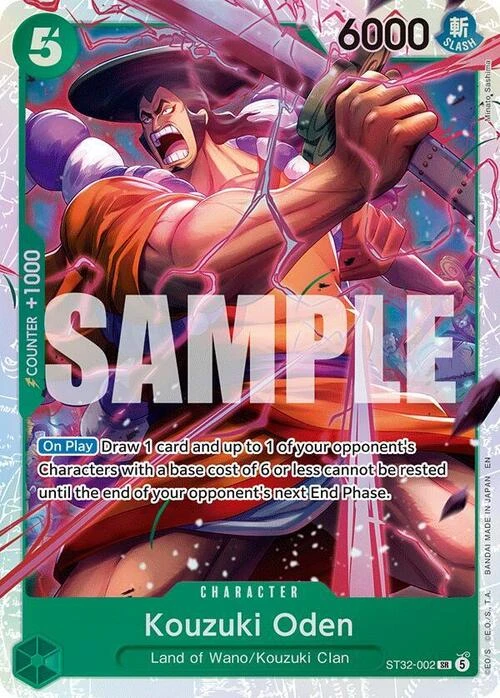
Green manipulates the state of cards (active vs. rested). This is typically used to freeze or negate opponents' attackers, but it can also be used offensively by restanding your own attackers or resting opponent blockers. These mechanics have become especially powerful since the nerfing of removal. If you can't remove a Character, freezing it is the next best option.
- Main Mechanics:
- Resting/Freezing. Forcing opponent Characters to rest (turn sideways) so you can attack/bypass them, or freezing Characters so they can't attack you.
- Re-standing. Setting your own Characters back to active after they attack, allowing them to attack again or remain safe during the opponent's turn.
- Style:
- Midrange/Defensive. Green decks often dictate the pace of combat, often building a fortress-like board state that is incredibly difficult for the opponent to break through.
- Recommended if you like:
- Locking opponents out of a game despite them having a full board, protecting powerful key units, and bypassing powerful defenses.
- Attacking a ton with a single Character or Leader.
- Don't play if you dislike:
- Slow, grindy games. Fortress-style green decks can lead to long games as you slowly suffocate the opponent's options.
- NOTE: More aggressive green decks like OP-12 Zoro can be some of the fastest in the game—so take this one with a hefty grain of salt.
- Slow, grindy games. Fortress-style green decks can lead to long games as you slowly suffocate the opponent's options.
- Example Leader: OP14-020 Dracule Mihawk.
While you can't play Characters after activating Mihawk's effect, it gives him access to a ton of firepower and Event options even if he's playing on curve.
Blue: Deck Manipulation
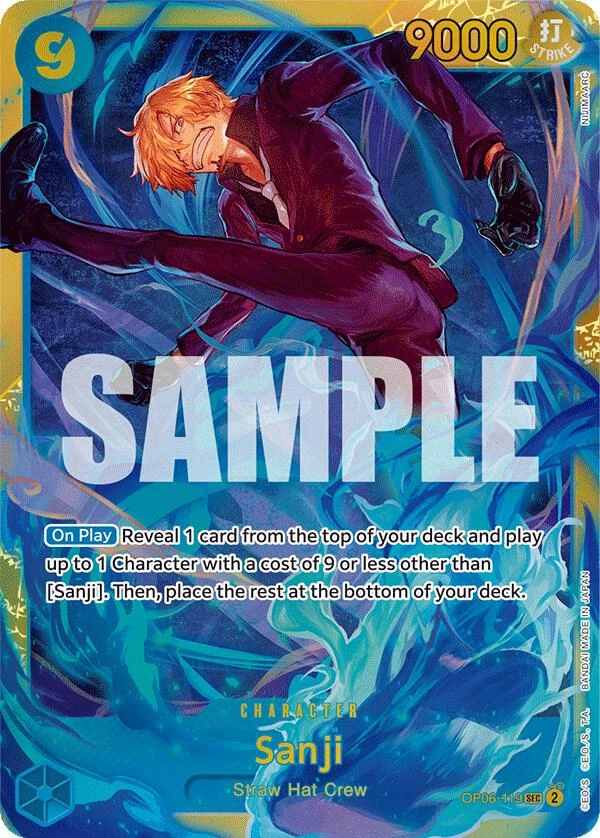
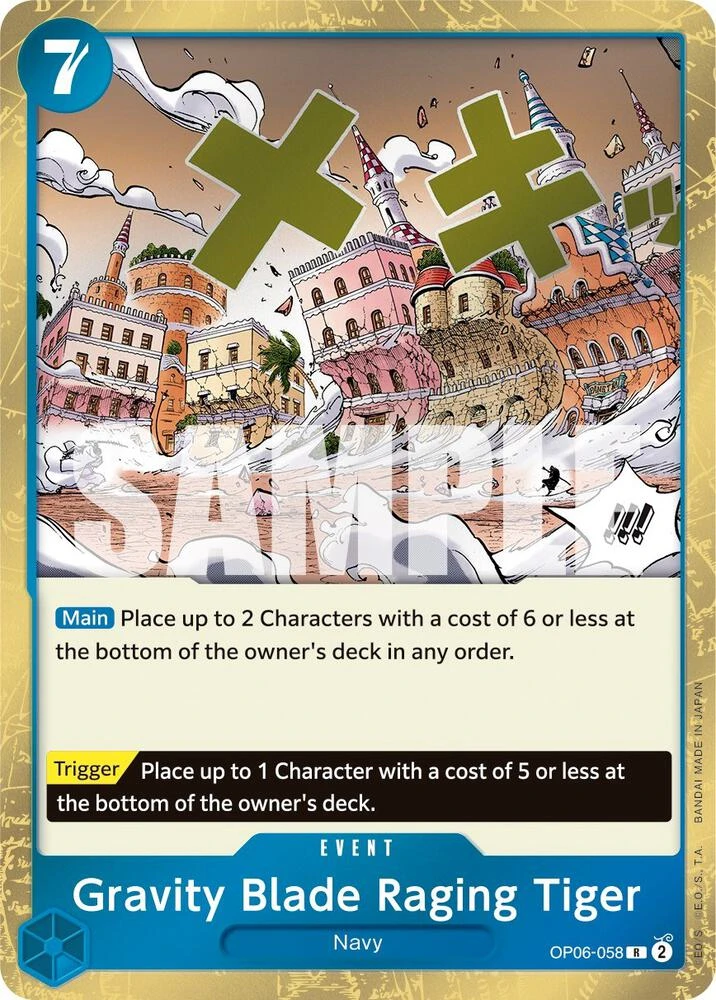
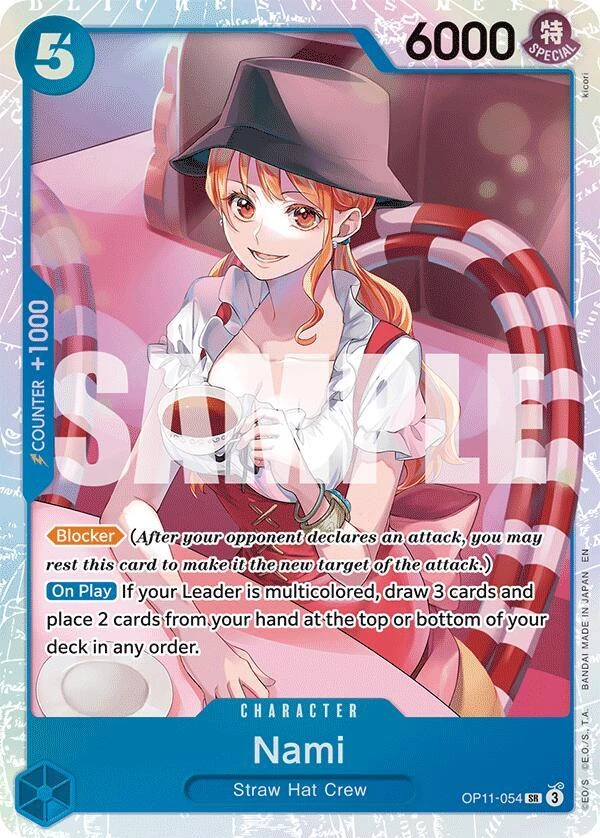
The color of removal, card cycling, and deck manipulation, blue decks usually avoid constant board combat in favor of tempo-swinging removal and incremental board-building (OP-14 Jinbe being a huge exception to this).
- Main Mechanics:
- Bottom-decking. Some of the strongest removal in the game. Sending a card to the bottom of the deck prevents "On KO" effects and graveyard recursion.
- Draw/Cycle. Blue excels at drawing cards and filtering out the hand, making it easier to get the cards you're looking for.
- Style:
- Control/Tempo. Blue frustrates the opponent by undoing their turns. You focus on removing threats without actually fighting them, keeping the board clear until you've built up an overwhelming force of big bodies.
- Support. Since blue is so good at drawing, filtering, and removal, it's great when combined with other colors. Many of the strongest two-color decks in the game have featured blue as one of the colors.
- Recommended if you like:
- Having a big hand and frustrating your opponent.
- Don't play if you dislike:
- Slow, incremental play. Blue is not typically a fast or explosive style—instead, it gains small advantages every turn until it can gain a crushing board state. Again, exceptions to this exist, like OP-01 Doflamingo and OP-14 Jinbe.
- Example Leader: OP12-040 Kuzan.
This deck builds a massive board that stalls out the opponent by freezing its Characters while accessing powerful effects whose "trash a card" downside is negated by the Leader effect.
Purple: DON!! Manipulation, Jack-of-All-Trades
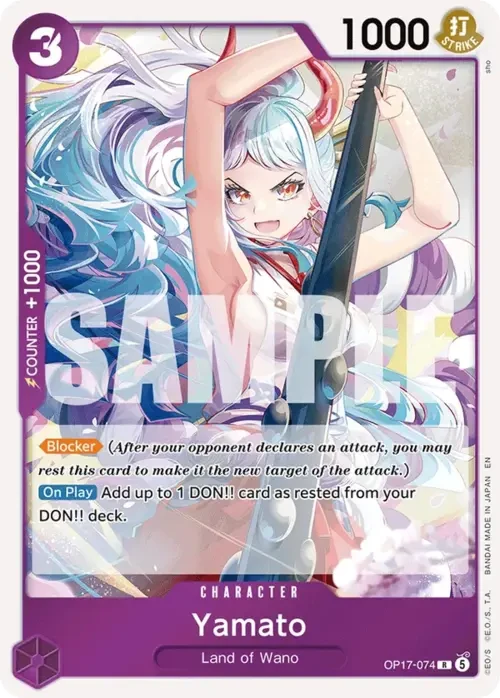
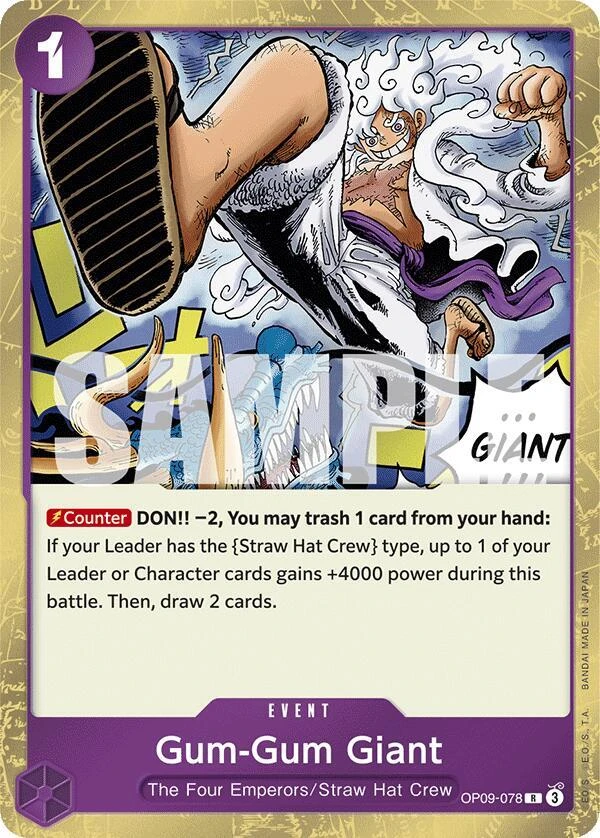
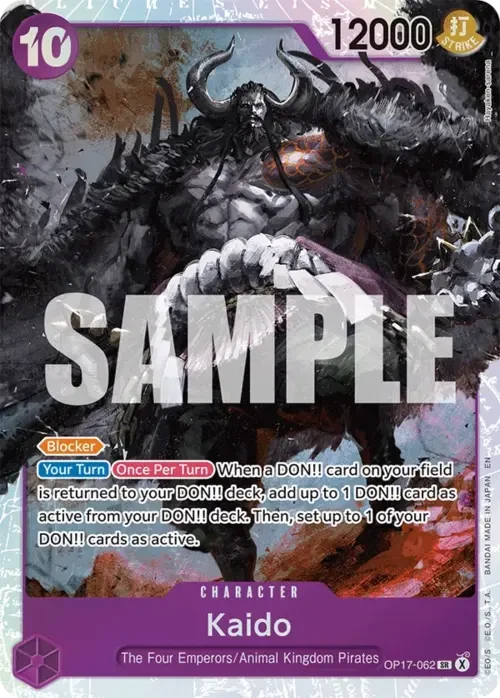
Purple cheats out (or "ramps") DON!! early in the game, allowing it to make big plays early. By returning that DON!! to the DON!! deck, it can sacrifice some of its DON!! pool for powerful swing turns.
- Main Mechanics:
- Ramp. Purple decks add extra DON!! cards to your field faster than the normal 2-per-turn rate, allowing you to play boss monsters earlier than anyone else.
- DON!! Minus. Many purple effects require you to return DON!! to your deck—essentially sacrificing resources—to activate powerful abilities that can protect your Characters, grant Rush etc.
- Style:
- Fast and flexible. By ramping early, you gain a tempo and resource advantage that you can capitalize on by making late-game plays early on, or by trading DON!! for a wide array of effects. Unlike other colors, purple has access to nearly every effect in the game, from resting, to removal, to power buffs.
- Recommended if you like:
- Ramp playstyles, resource management, flexible play lines, and trading long-term resources for short-term power.
- Don't play if you dislike:
- Doing math on your resources. If you mismanage your DON!! minus effects, you can set yourself back too far to recover.
- Example Leader: OP15-058 Purple Enel.
Per the rules, Enel only gets access to a 6-DON!! deck instead of the traditional 10, but he gets to ramp 5 DON!! every turn, attaching 4 of those to his own Characters. It's somewhat different from the traditional purple playstyle, but it's undoubtedly got access to all the functionality and quirks that define the color.
Black: Removal, Cost, and Trash Manipulation
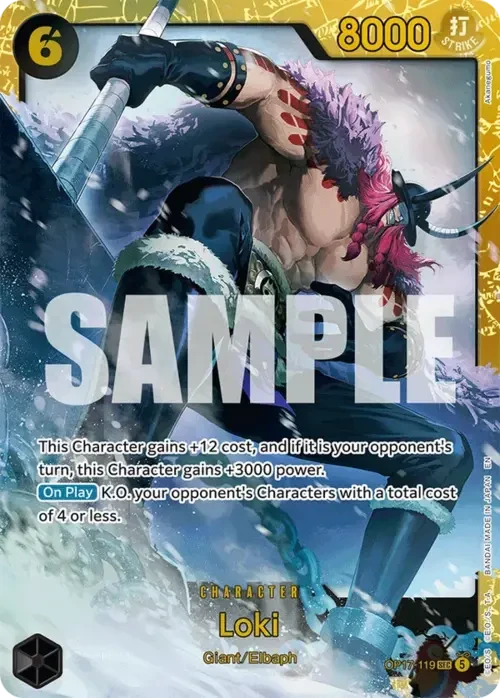
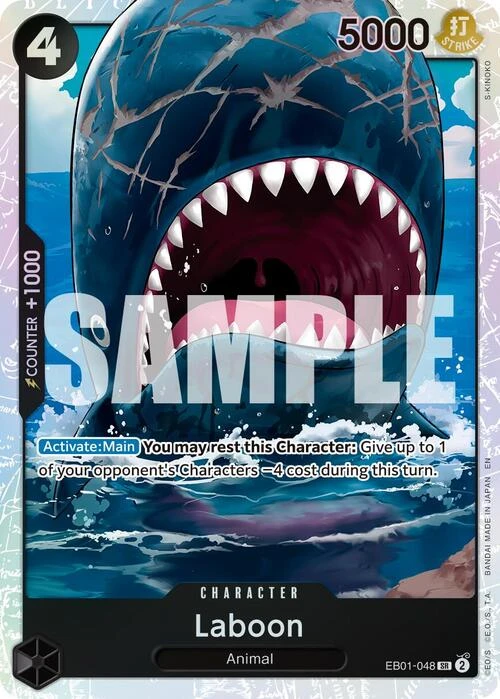
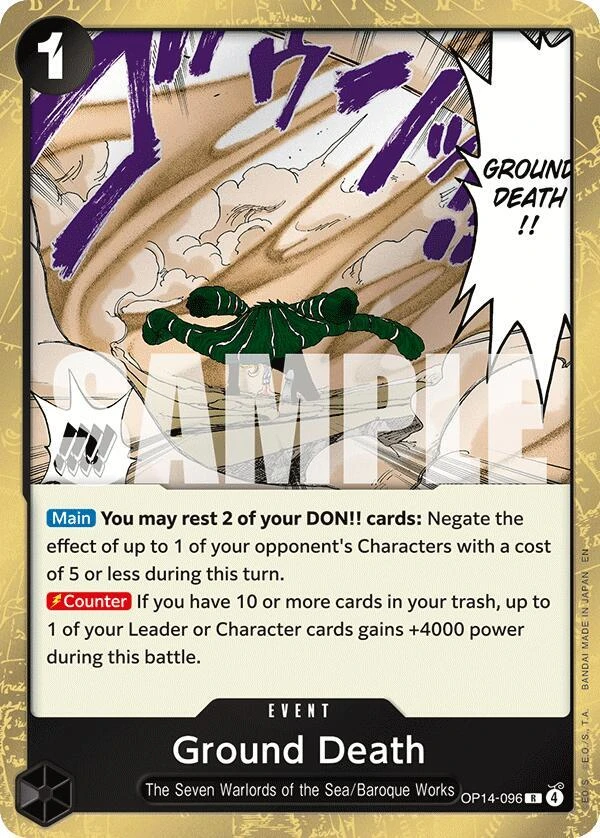
The color of cost manipulation, effect negation, trash-building, and removal, black was at one point the most powerful color in the game until the banning of Gecko Moria and Ice Age, which heavily nerfed removal. Now, the most powerful black decks tend to lean into the effect negation and cost-based Character buffs (or debuffs).
- Main mechanics:
- Cost manipulation. Many black cards only apply to Characters based on their cost (e.g. K.O. a 4-cost or less Character). Black relies on cost manipulation effects to bring Characters into a range where its cards become functional.
- Trash recursion. Bringing cards back from the trash to your hand or field.
- Effect negation. Many black Leaders, like OP-09 Teach, OP-13 Imu, and OP-14 Crocodile, are powerful because they negate enemy effects. Teach negates on-play effects, Imu's Characters can't be KO'd, and Crocodile prevents Characters from attacking.
- Style:
- Control/Combo. Black is puzzle-like, with most black decks requiring you to set up your hand or trash in order to remove threats or establish your most powerful bodies.
- Recommended if you like:
- Synergistic combos, K.O.ing the opponent's board efficiently, and using your trash as a second hand.
- Don't play if you dislike:
- Tracking your trash. Since many black decks allow you to quickly fill up your trash, you'll need to constantly check it to understand what's in there and to deduce what's left in your deck. Understanding the trash pile is key to being a great black deck player, so avoid the archetype if that's not your thing. Also, arithmetic.
- Example Leader: OP14-079 Crocodile.
While Crocodile's Leader effect explicitly disallows Crocodile from removing opponent Characters from the field, he uses those cost-based debuffs to activate his own On-Play effects.
Yellow: Life Card Shenanigans
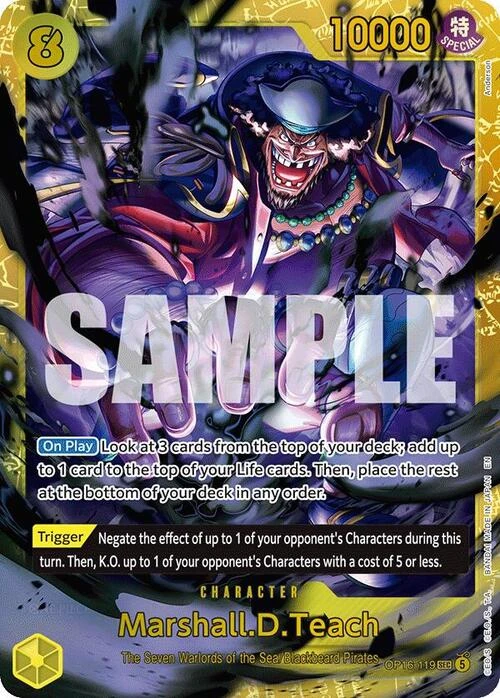
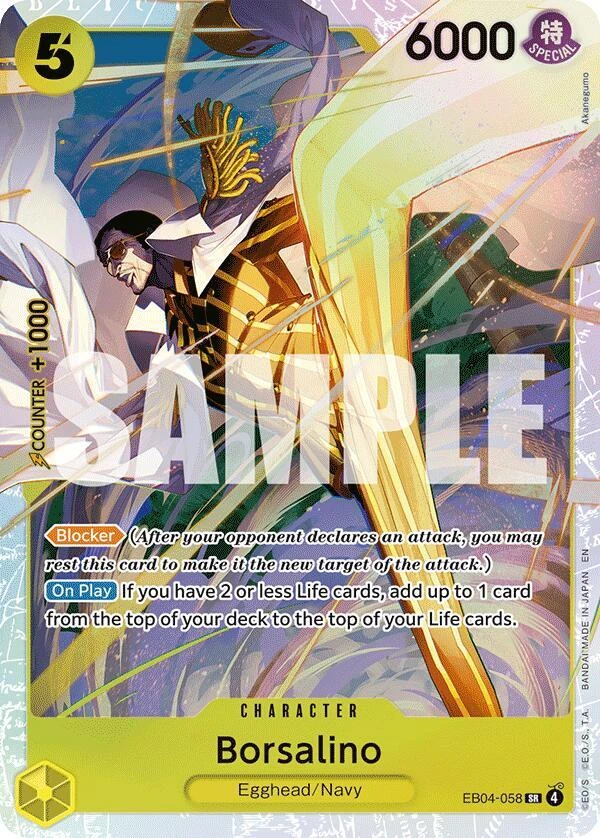
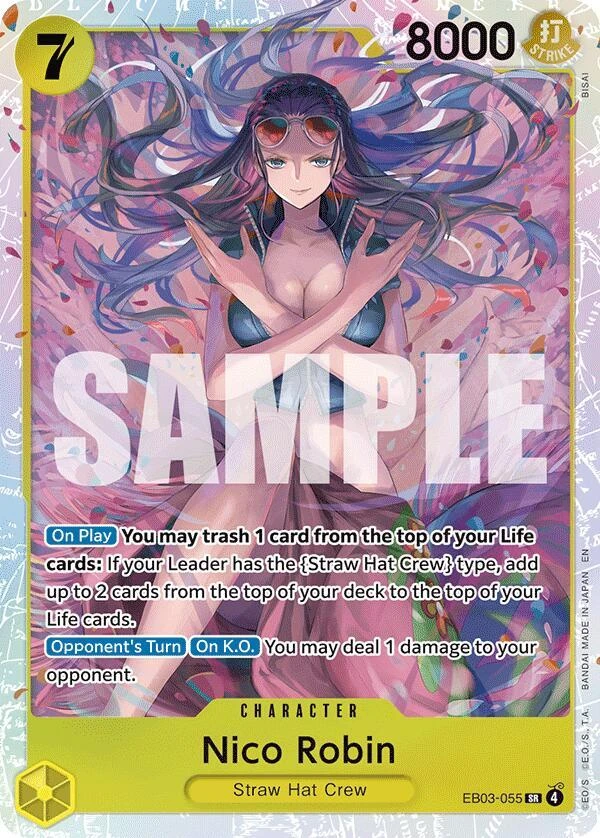
Yellow is the color of luck, sustain, and overextension punishment. With the most trigger effects in the game, yellow takes the idea of Life as a resource to the next level, severely punishing opponents who try ending the game too early.
- Main mechanics:
- Triggers. Yellow cards often have powerful trigger effects that can completely change the course of a game.
- Life manipulation. Adding cards to your Life (healing) or rearranging Life cards, or flipping Life over to activate powerful effects.
- Style:
- Putting your opponent on a clock, RNG. Yellow Leaders put your opponent in a precarious position. If they don't win fast, you can heal out of lethal range, but if they go all-in too soon, they can run into a back-breaking trigger. If you want to play a simple game and make your opponent do most of the thinking, this may be the color for you.
- Recommended if you like:
- Mind games, healing, and a luck-based X-factor that can turn a losing game into a winning one instantly.
- Don't play if you dislike:
- RNG (randomness). While triggers aren't as important as they once were, sometimes you just die when you don't see any. Live by the trigger, die by the trigger.
- Example Leader: ST29-001 Luffy.
When he's at 2 or less Life, this Luffy Leader can draw and trash a card while attacking, but that's not really his Leader effect. Instead, his real power comes from the fact that he starts the game with 6 Life instead of 5.
And yes, that is a very strong effect.