Top 5 New One Piece Decks From Paramount War
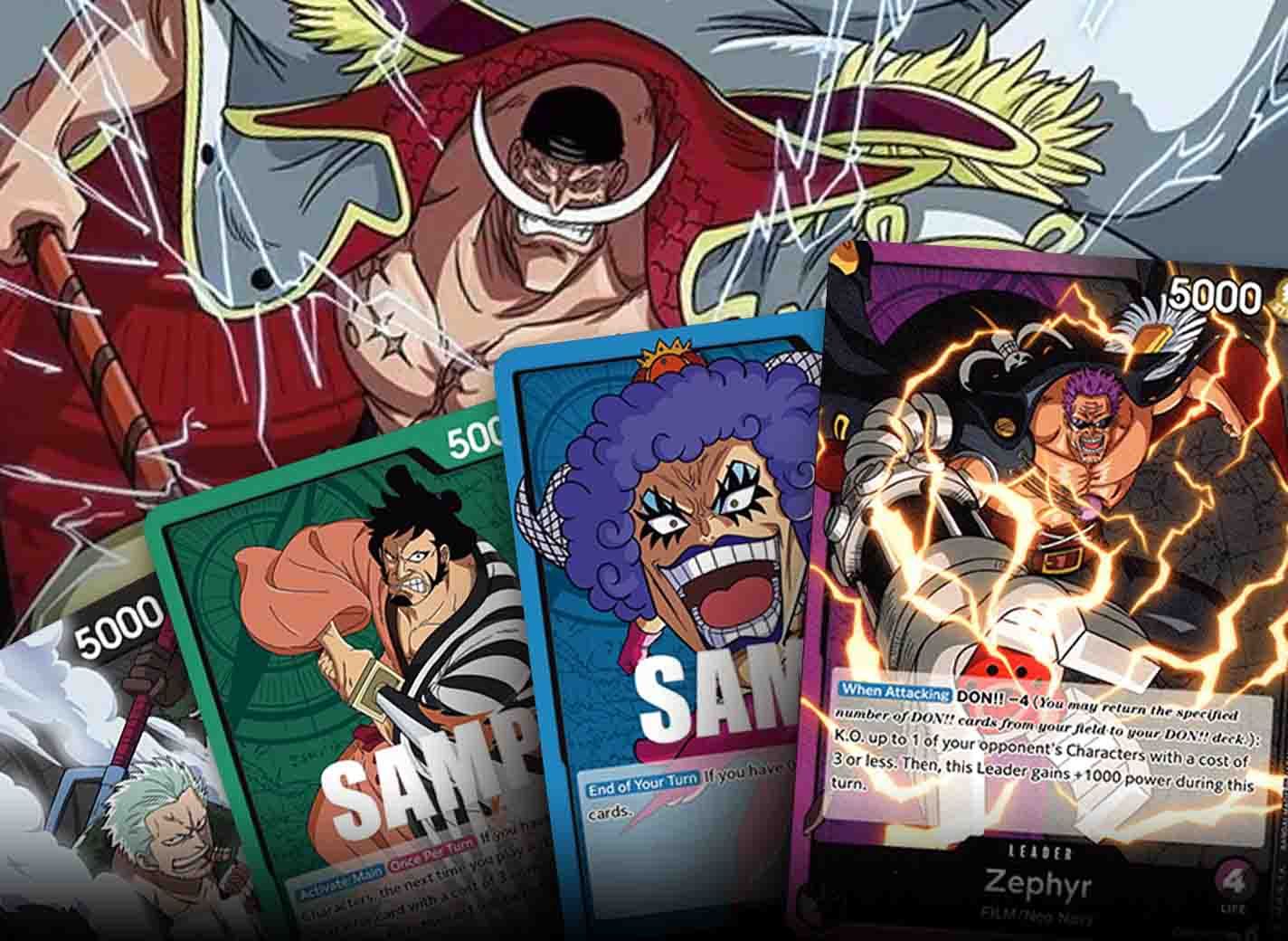
The Summit War is upon us, and with it comes a whole host of new cards and leaders that are poised to make their mark on the new One Piece metagame.
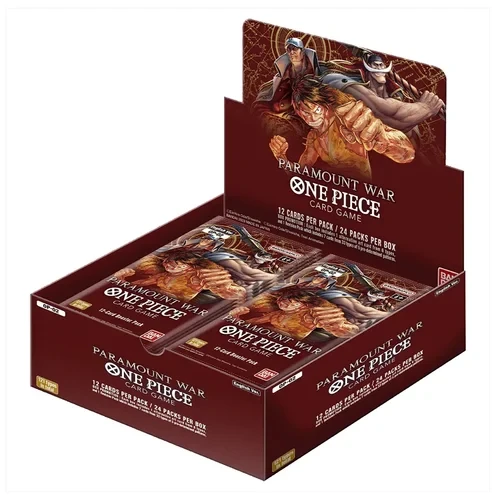
Some of these cards could certainly be utilized to bolster existing strategies, but today I'd like to focus on the new archetypes coming into the format so you can decide which decks interest you most. So to help get everyone started, here are the top five new One Piece decks coming into the format with OP2 The Summit War.
#5 Hand Trash Ivankov
We'll start off with one of the more unique archetypes coming into the game: Hand Trash Ivankov.
The point of the deck is to quickly empty your hand by aggressively countering attacks and utilizing discard abilities so you can quickly churn through your deck with Ivankov's passive.
Normally you're pretty heavily incentivized to take one or two damage early to help bolster your hand, but Iva flips that dynamic on its head because you're trying to empty your hand as quickly as possible so the extra cards from life can actually be detrimental. As such, the deck is usually built with a pretty high counter density and low mana curve so nothing gets stuck in your hand. That said you still have several discard outlets, so having a few expensive cards with no counter value can certainly be managed.
- 1x Emporio Ivankov OP02-049
- 4x Inazuma OP02-050
- 4x Emporio Ivankov OP02-051
- 4x Monkey D. Luffy OP02-062
- 4x Mr. 2 Bon Clay (Bentham) OP02-064
- 4x Mr. 3 (Galdino) OP02-065
- 3x New Kama Land OP02-070
- 4x Dracule Mihawk ST03-005
- 4x Love Love Mellow ST03-017
- 4x Donquixote Doflamingo OP01-073
- 4x Alvida OP01-064
- 4x Buggy OP02-058
- 4x Perona OP01-077
- 3x Dracule Mihawk OP01-070
This is likely one of the most balanced ways to build Iva and would be an excellent starting point for anyone trying to familiarize themselves with the deck. This deck has the benefit of being able to maintain a very robust count of 2,000 counters and blockers thanks to how lean the core payoff package is, so you should never feel lacking for defense. You also get to play cards like Perona, Buggy, and New Kama Land to drastically increase the consistency of your deck. New Kama Land in particular is very valuable, as it allows you to clear undesirable cards you've seen with Perona off the top of your deck or empty your hand of expensive cards so you can refresh with Iva's Leader ability.
Some other discard outlets include cards like Mr. 3 (Galdino) and Monkey D. Luffy, both of which are very powerful in their own ways.
Galdino allows you to continually pressure your opponent while keeping your blocker active as long as you have a card to spare. While they both happen at the end of turn, Galdino's effect happens before Iva's leader ability checks your hand size, so if you have exactly 1 card you can discard it to Galdino and then still draw 2 with Iva.
Luffy on the other hand is one of the deck's main enablers and core finishers. Being able to bounce a blocker out of the way while making a large double-damage swing can obviously end the game very quickly, and the two cards you're trashing will usually get your hand size low enough where you can draw two with Iva at the end of the turn.
All that said, it's important to note that Luffy isn't going it alone and is supported tremendously by the Emporio Ivankov character card. The deck's most powerful interaction is the one between character Iva and Luffy, as Iva's ability can put Luffy into play for free while ensuring that you still have two cards in hand to activate Luffy's effect immediately.
This is one of the strongest tempo plays in the format, if not the strongest, so if that kind of gameplay appeals to you I would certainly recommend giving this deck a shot. It's also one of the more accessible archetypes. The only two new cards in it above Rare are character Iva and Luffy, so it shouldn't be too difficult to put together.
#4 Ramp Control Zephyr
This one might not end up being as strong of a player in the metagame as the others on this list, but it's unique and situationally powerful enough that it felt worth an inclusion.
Zephyr control combines the ramp cards from purple with the powerful top end cards from black to try and create an overwhelming game state as soon as possible. Boiled down most simply, your goal is to get Kuzan into play early so your leader ability can KO almost anything while drastically increasing the power level of any other cards in your deck that also care about cost.
This deck has very unusual play patterns, so I wouldn't recommend it to a newer player. But for anyone who enjoys a bit of a challenge, piloting this deck optimally can be very rewarding.
- 1x Zephyr OP02-072
- 4x Kuzan OP02-096
- 4x Kuzan OP02-121
- 4x Sakazuki OP02-099
- 4x Ulti OP01-093
- 2x King OP01-096
- 4x Sasaki OP01-101
- 4x Queen ST04-005
- 4x Koby OP02-098
- 4x Tsuru OP02-106
- 4x Borsalino OP02-114
- 4x Monkey D. Garp OP02-115
- 4x Thunder Bagua OP01-119
- 2x Shockwave ST06-014
- 2x Tashigi ST06-006
As a more reactive deck there will always be a fair amount of flexibility in exactly what you'd like to include, but this build should be a solid place to start if you're interested in the archetype. The main points of contention are how much ramp you can afford without diluting your top end, and how many counterless cards you can include without leaving yourself defenseless. The latter is something that all One Piece decks need to consider to some degree, but Z has a harder time with it considering how many of the core cards to the archetype don't have a counter value. As awkward as that can sometimes be, you do have several ways of trashing dead cards in hard for value through cards like Sakazuki, Koby, and to a lesser extent Sasaki.
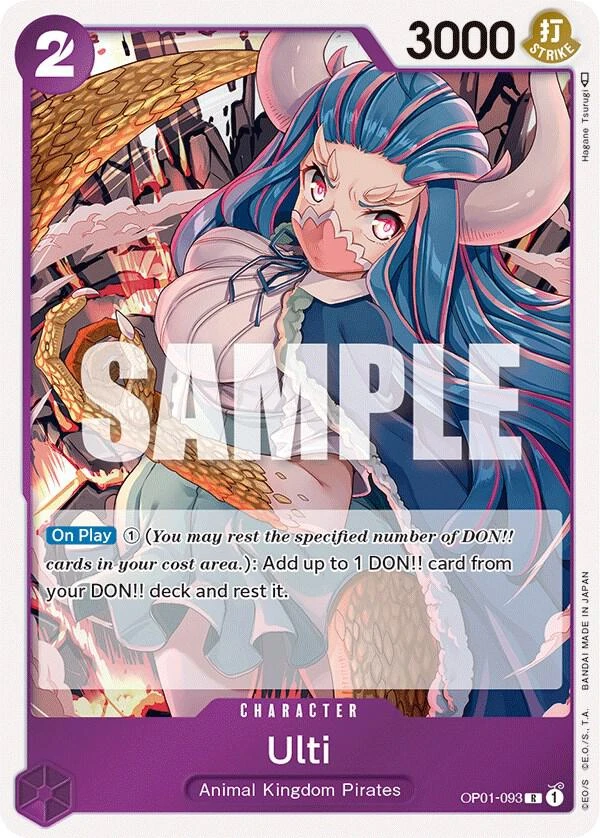
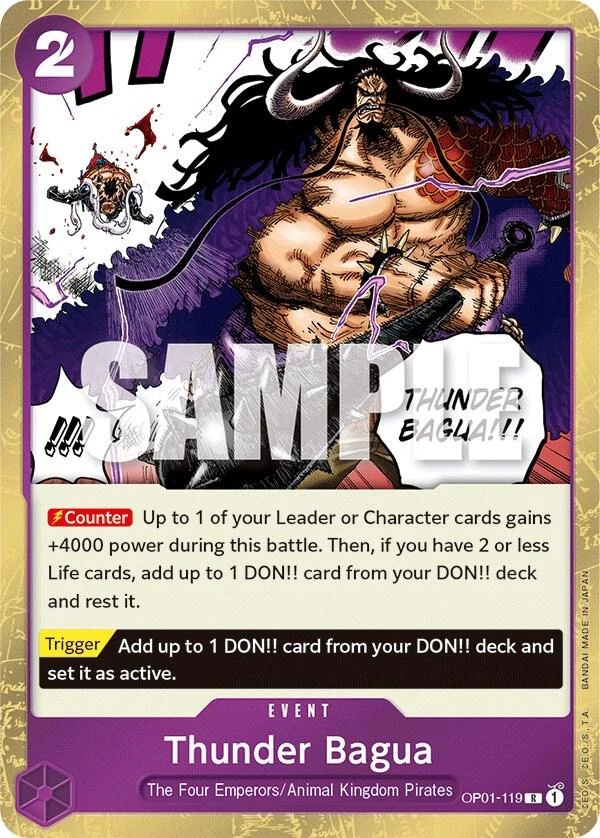
While Sasaki is a serviceable backup plan, the main ways you ramp with the deck are through Ulti and Thunder Bagua. Bagua may not seem incredibly reliable, but because you're a two-color deck that only starts with 4 life, you can elect to take two life cards early in order to get Bagua online quickly. This is a common play pattern on the draw as any combination of two ramp cards while going second results in a lightning quick turn-four Kuzan.
If you want to increase the consistency of that draw you could certainly play more ramp cards like Jack or even Elephant's Marchoo, but you would likely have to lower your 2,000 counter density to do so. These ramp cards also give you a way to recuperate DON!! in the late game after you get Kuzan in play and start activating your leader ability, which keeps them relevant at all stages of the game.
#3 Kin'emon Midrange
The Kin'emon deck won't be too unfamiliar to those who have spent some time in OP1 with Eustass Kid, as large portions of the core can remain the same. That said, you can deviate quite heavily from the pre-existing green decks if you so wish, and there are notable payoffs for doing so.
If you build around it, Kin'emon's leader ability allows for much more explosive draws than the Kid deck was ever capable of. This archetype is fairly open ended, so don't be afraid to get creative and adjust to whatever you happen to be experiencing in your own metagame.
- 1x Kin'emon OP02-025
- 3x Kouzuki Oden OP02-030
- 4x Kouzuki Momonosuke OP01-041
- 4x Yamato OP01-121
- 4x Yamato OP02-042
- 4x Kouzuki Toki OP02-031
- 3x Raizo OP01-052
- 4x Izo OP01-033
- 2x Eustass "Captain" Kid OP01-051
- 4x Okiku OP01-035
- 4x Jewelry Bonney ST02-007
- 2x Punk Gibson OP01-058
- 4x Scratchmen Apoo ST02-008
- 4x Killer OP01-039
- 2x Basil Hawkins ST02-010
- 2x Nekomamushi OP01-048
The main difference Kin'emon has relative to pre-existing Kid decks is the emphasis on powerful Wano cards like Yamato, Yamato, and Kouzuki Oden. Being able to play these cards either a turn ahead of schedule or alongside other cards they would normally not be able to be played with on the same turn are both very powerful payoffs. In particular the sequence of turn-one Okiku into turn-two Yamato while going second is one of the most powerful draws in the game. That explosiveness is what sets Kin'emon apart from other green decks like Kid and solidifies its place in the metagame.
You still try to maintain some semblance of the old Kid core, as there are several powerful cards there, but exactly how much and which cards are very much up for debate. When I was looking through old tournament decklists for this article the archetype that had the most deviation from deck to deck was Kin'emon by far, so while I believe the list above to be a strong starting point, it's likely you will end up branching out to different things over time.
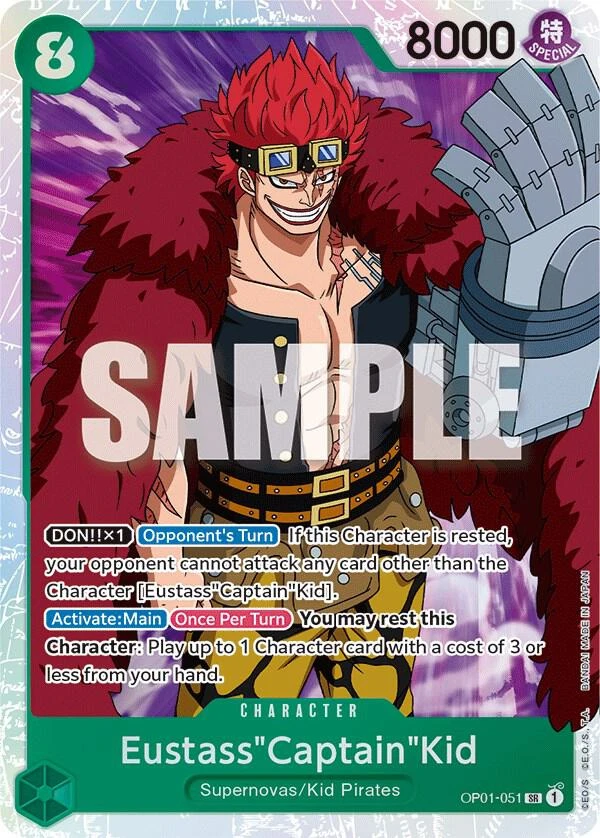
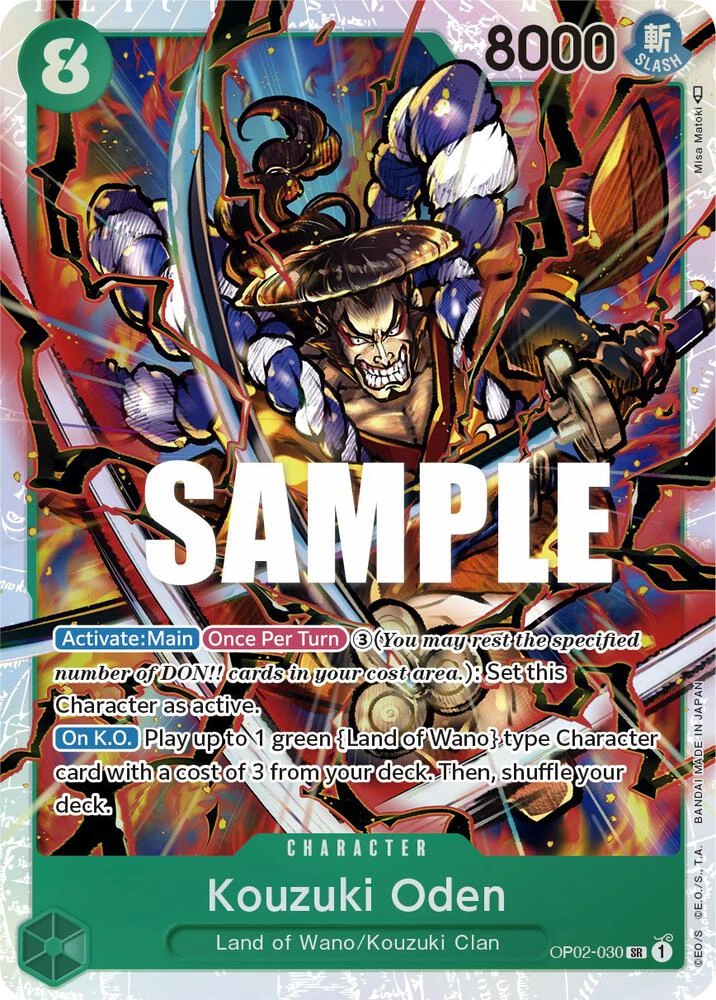
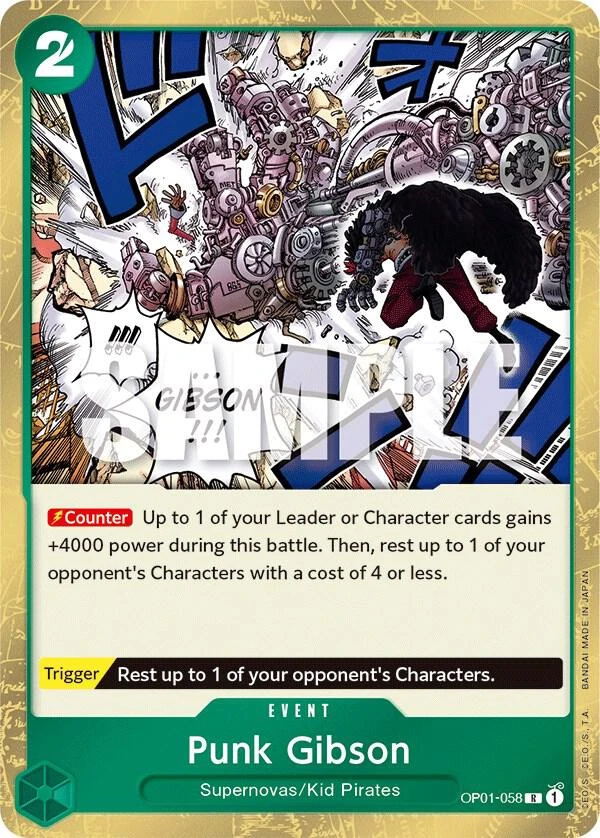
For example, while this deck splits the difference between the powerful eight-drops Eustass "Captain" Kid and Kouzuki Oden, it would be totally reasonable to just omit Kid entirely if you want to play the deck more aggressively. On the other side of the coin, you could also play more blockers and cards like Punk Gibson if you wanted to play a bit of a slower game.
There are very few hard limitations on exactly what you can do with your Kin'emon deck so have fun finding out what exactly works best for you.
#2 Smoker Midrange
Smoker is the less explosive, but much more reliable version of Zephyr that will likely be one of the most popular new decks in the format. Black has a wide array of strong interaction complemented by some hard-to-answer threats to form a strong base for any midrange strategy.
There is also a pseud-tempo element to a lot of Black's interaction, as most of their KO effects require you to trash a card from your hand as well, making those exchanges card neutral in the same way Blue's bounce effects are. The only difference is both players go down a card instead of neither player losing a card. It's important to remember this when playing the deck, as it's easy to get tricked into playing a more controlling card advantage-based game with all of your removal, but that's not the axis most of these cards are actually attacking your opponent on.
- 1x Smoker OP02-093
- 4x Kuzan OP02-096
- 4x Koby OP02-098
- 4x Sakazuki OP02-099
- 4x Smoker OP02-102
- 4x Tsuru OP02-106
- 4x Borsalino OP02-114
- 4x Monkey D. Garp OP02-115
- 3x Kuzan OP02-121
- 3x Smoker ST06-004
- 4x Shockwave ST06-014
- 4x Tashigi ST06-006
- 4x Hina OP02-110
- 4x Donquixote Rosinante OP02-108
As a new color with a comparatively limited card pool, most of the core for Smoker is fairly inflexible, but that doesn't mean these cards are weak.
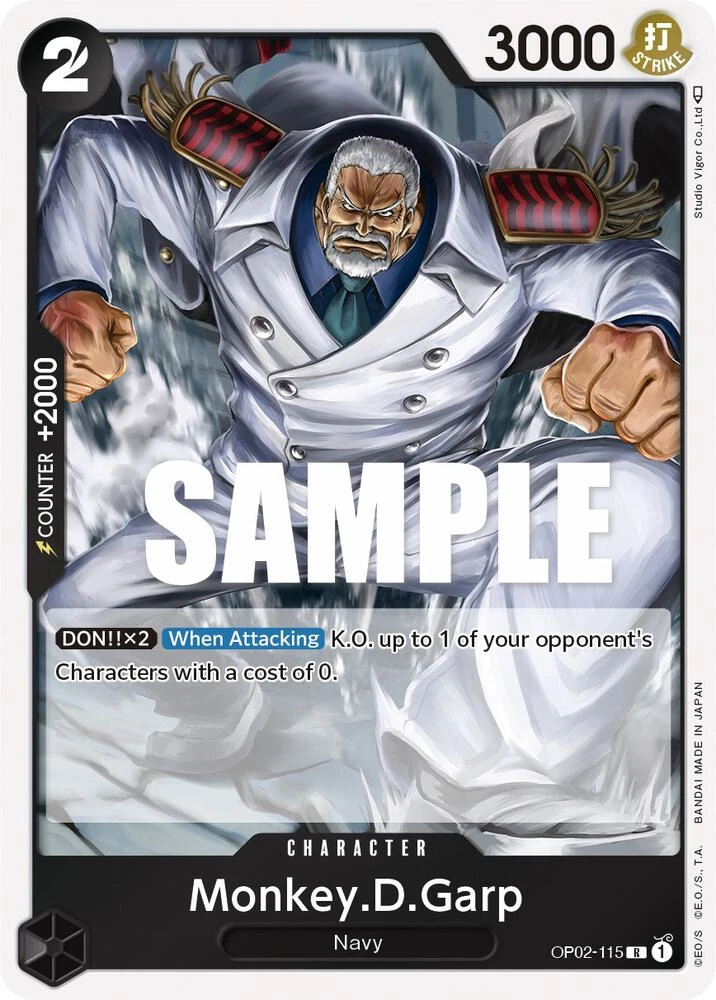
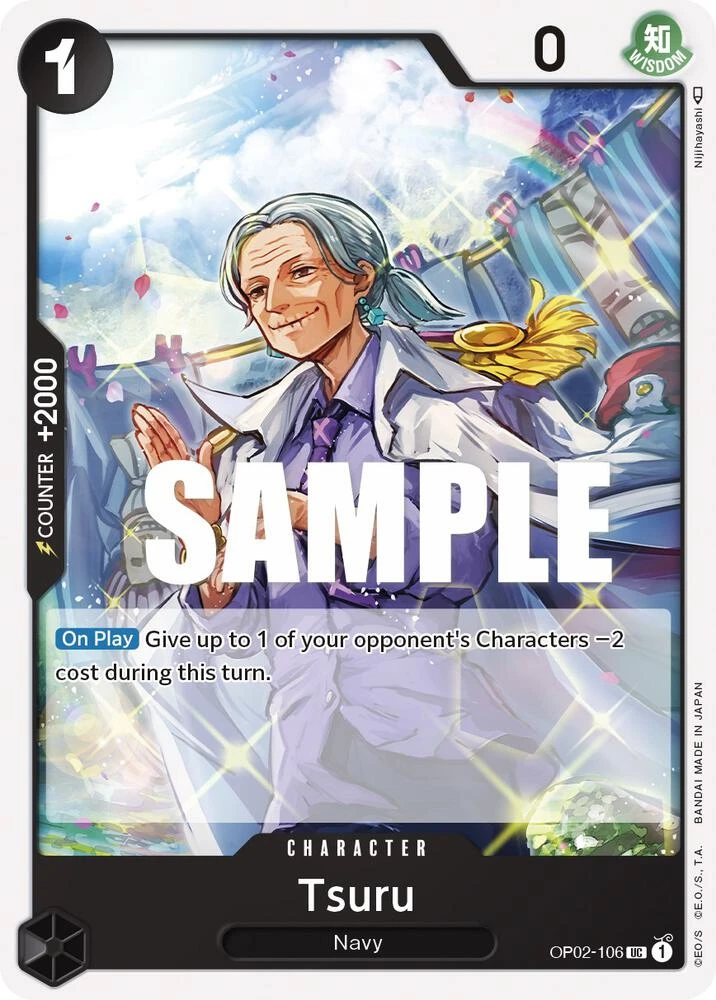
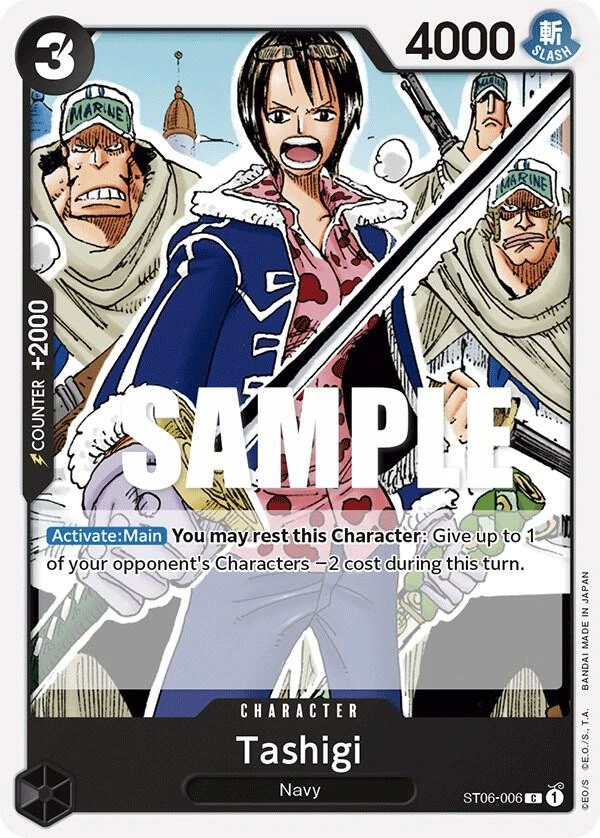
You have three exceptional 2,000 counters in Monkey D. Garp, Tsuru, and Tashigi that all have use outside of just being a counter, so you're already starting with a solid density of counters. The threatbase also features some incredible heavy hitters like Smoker, who is stated like a vanilla, but has a lot of very relevant text.
This card shines brightest alongside the Smoker leader, as it allows you to punish your opponent very heavily by making any stray 1 cost characters in play 0 cost, and thus giving Smoker Double Damage. That dynamic is a huge part of Smoker's success against the format's aggro decks because you can turn the corner so quickly.
You also have access to what may now be the best blocker in that game with Borsalino. Being a 6,000 for 4 cost is already great, but his immunity to KO effects really puts the card on another level. Borsalino's presence is also complemented by Hina, who can be incredibly disruptive to wide boards, and Donquixote Rosinante as simply the cheapest blocker in the color.
Having powerful and efficient blockers alongside threats that are immune to being KOed by card effects like Smoker and Smoker makes it very hard for your opponent to break up your board presence. Meanwhile, you devastate theirs with cards like Sakazuki and Koby. Black is secretly a tempo deck, so being able to play "protect the queen" with your more important threats goes a long way toward snowballing the game in your favor.
#1 "Death's Shadow" Whitebeard
At the top of our list, we have a deck for those who like to live on the edge and try to manage a game while inches away from death. Whitebeard loses a life naturally every turn to compensate for its high base power, but that doesn't necessarily have to be a drawback.
Each of those life cards represent an additional resource you have access to, and there are several cards in the deck that care about you being at low life. The Whitebeard deck is at its most powerful when it's at 1 or less life, and if managed correctly, you can stay in that state for longer than you might think.
- 1x Edward Newgate OP02-001
- 4x Edward Newgate OP02-004
- 4x Moby Dick OP02-024
- 4x Whitebeard Pirates OP02-022
- 4x Vista OP02-011
- 4x Jozu OP02-008
- 4x Marco OP02-018
- 2x Portgas. D. Ace OP02-013
- 4x Radical Beam!! OP01-029
- 4x Guard Point ST01-014
- 4x Otama OP01-006
- 4x Atmos OP02-003
- 4x Kingdew OP02-006
- 4x Bartolomeo OP01-019
The main payoff for the Whitebeard deck is Moby Dick. This is the card that heavily rewards you hovering at 1 or less life and allows you to turn the corner on your opponent incredibly quickly. Frequently you will even take a hit or two intentionally to get your life low enough to turn on Moby Dick as soon as possible. That is the dance with the deck—how fast can you get to a board with a couple Whitebeard Pirates alongside Moby Dick while at 1 life, without leaving yourself vulnerable to a lethal attack.
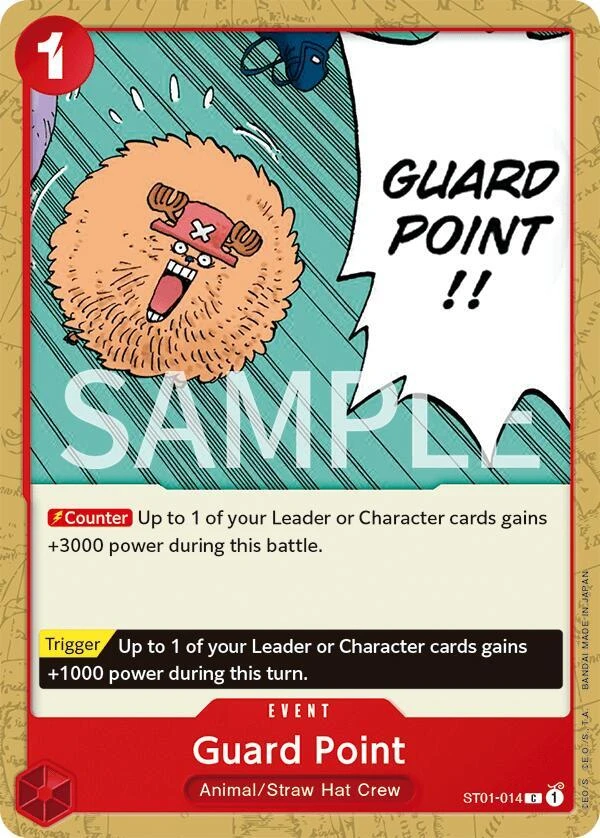
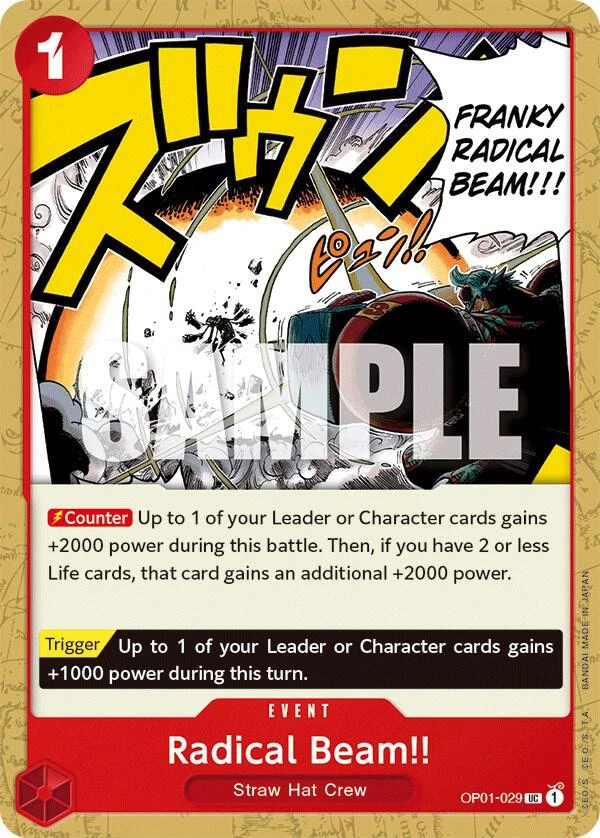
The deck has several powerful tools to help you survive on the edge of death, the first being your counter events Guard Point and Radical Beam!!. Both of these allow you to counter an attack from hand that would normally be far too large to guard effectively. Radical Beam in particular is exceptionally strong when you're already hovering at low life.
Your next line of defense is your blockers, headlined by the incredibly resilient Marco. They don't call him The Phoenix for nothing. Marco is an essential part of the deck's defensive strategy because he can remain in play for as long as you have cards to discard for his ability, and a 5,000 power blocker is already resilient to some of the more common forms of removal to begin with. That said, he can still only block 1 attack per turn, so be careful which one you choose.
Bridging the gap between offense and defense is the deck's captain, Edward Newgate himself. In this deck Newgate's ability brings your leader to a whopping 8,000 base, making you incredibly safe from attack—especially if played on 10 DON!!, as you'll still have 1 open for either Radical Beam or Guard Point. Newgate also threatens to end the game quickly with his massive 10,000 body and ability to clear any smaller blockers out of the way.
As powerful as this card is, it may not be at its best in the mirror, as an 8,000 base matters a lot less when your opponent has an active Moby Dick on their side of the table. There are even builds that cut this card entirely in favor of Squard to really go all in on the Moby Dick payoff, but that obviously carries a great deal of risk and is not something I would recommend starting with.
The Whitebeard deck is not for the faint of heart, but if you're able to sit on the edge of death and still come out on top, it can be an incredibly rewarding experience.