How to Play the One Piece Card Game
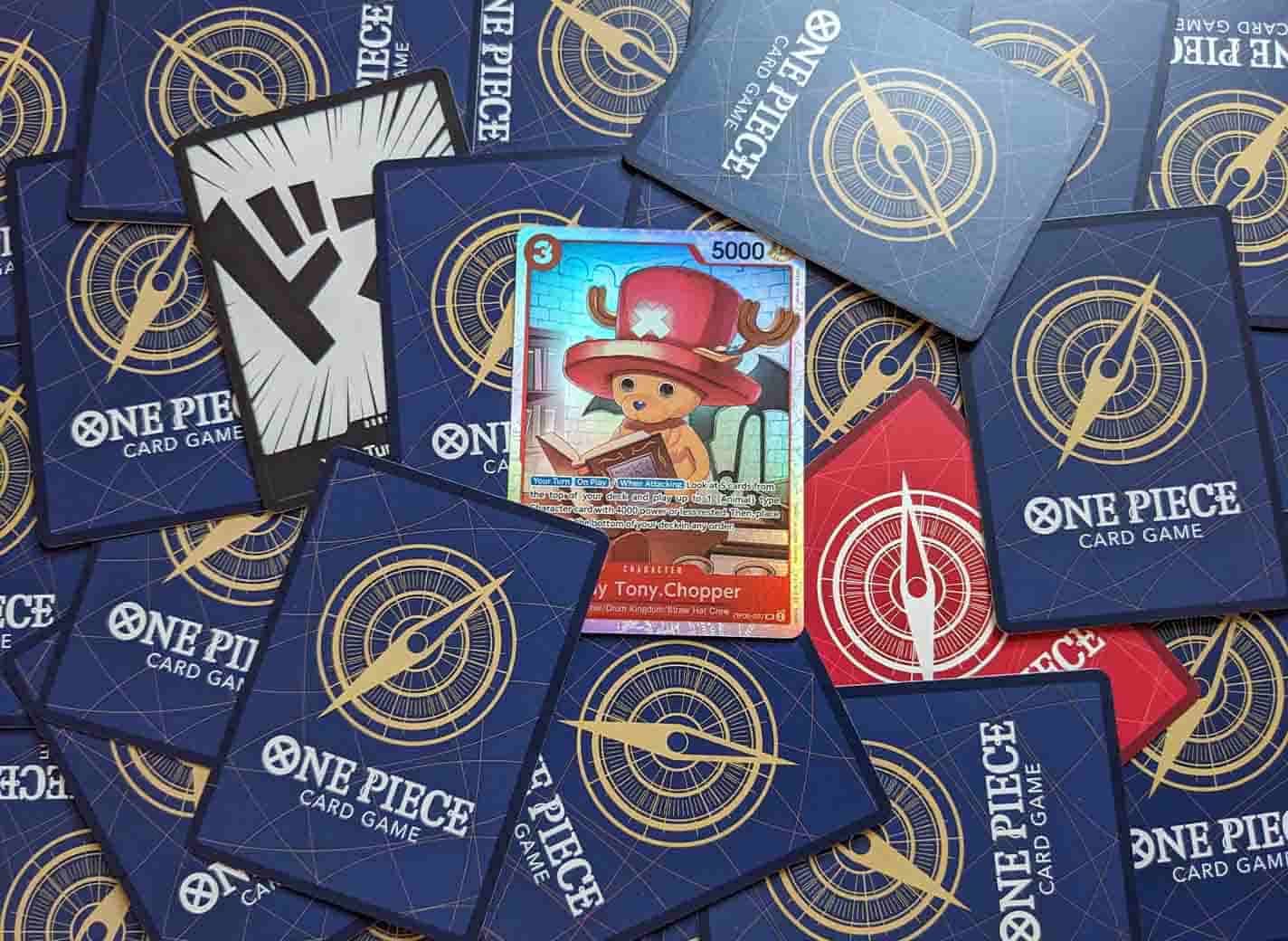
"I don't know. I'm already so far behind. I don't think I want to persevere for years until it finally starts getting good..."
Is he talking about the TCG? The anime? Maybe even the manga?! It's impossible to know for sure.
One Piece has a reputation for being a bit of a slog if you weren't around when this story began. There's 28 years of history here. We're talking about one of the most popular pop culture properties in the world. It's time intensive and incredibly daunting to stare down that barrel and attempt to enjoy something you feel like you've missed. Honestly? I don't blame anybody for putting it off.
Thankfully, the trading card game hasn't been swallowed by quite the same level of prestige just yet. The One Piece TCG broke into the west back in July 2022 and has been swinging from strength to strength ever since. After three years of evolution, we're still seeing Regional Championships and Treasure Cup events sell out within minutes of going on sale. That's a ringing endorsement and important reinforcement that it's worth investing your time and money... but where exactly are you supposed to begin if you want to play the game?
If only there was some kind of handy guide to reference about all the basics of the One Piece Card Game. Something you could pull up on your phone when you're unsure about how something works...
Hang on a minute.
What Even Is the One Piece Card Game?
The One Piece Card Game is a trading card game from Bandai Namco, designed to let you build decks around your favorite characters from the franchise and fight alongside them in a battle of attrition. Each deck you play is helmed by a Leader card of your choosing, so let's see what they look like:
Your Leader comes with a few defining characteristics, the first of which is color. This Monkey.D.Luffy is red. Therefore, you can only play red cards in a deck helmed by him.
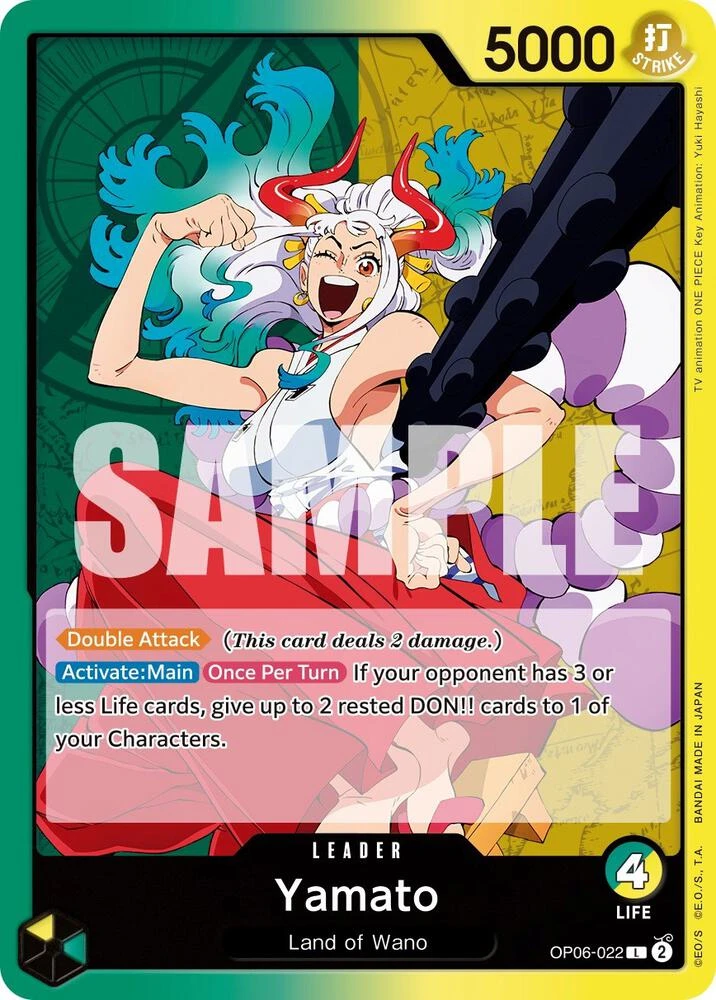
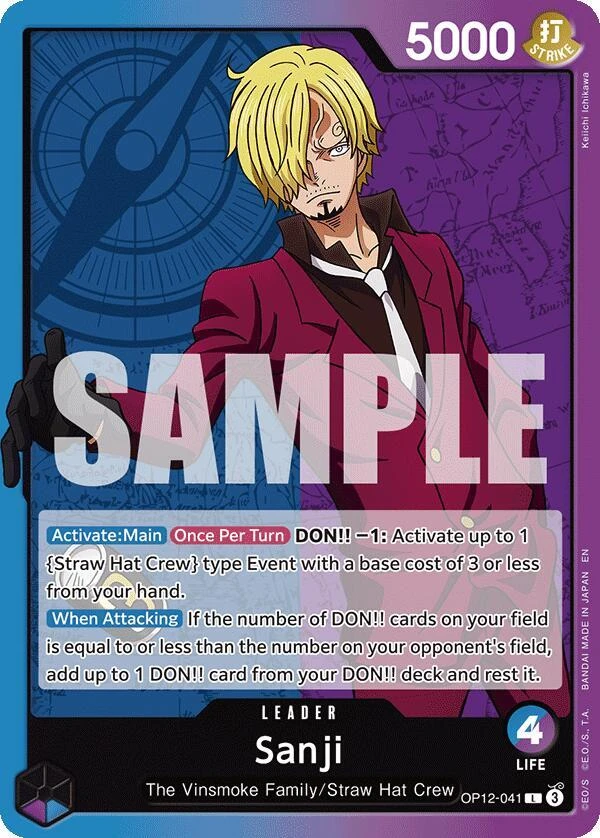
There are six colors to choose from—blue, yellow, black, green, red and purple—and each one offers a different selection of archetypes and abilities to choose from. You'll even find Leader cards that offer access to multiple colors in exchange for some other weakness, such as Yamato (OP06-022) or Sanji (OP12-041).
Each Leader has a unique ability inside its textbox. Monkey.D.Luffy (ST21-001) looks to double dip on your DON!! resources to aggressively pressure the opposing Life while continuing to get ahead on board. You'll see a power value in the top right-hand corner of your Leader card that denotes how much damage your Leader is capable of if they're attacking alone, and a big, bold Life total in the bottom right corner. We'll get into exactly how that works a little later on, but it's basically the number of hits your Leader can take before losing the game. If you ever take damage while you have no Life cards remaining, it's lights out for you.
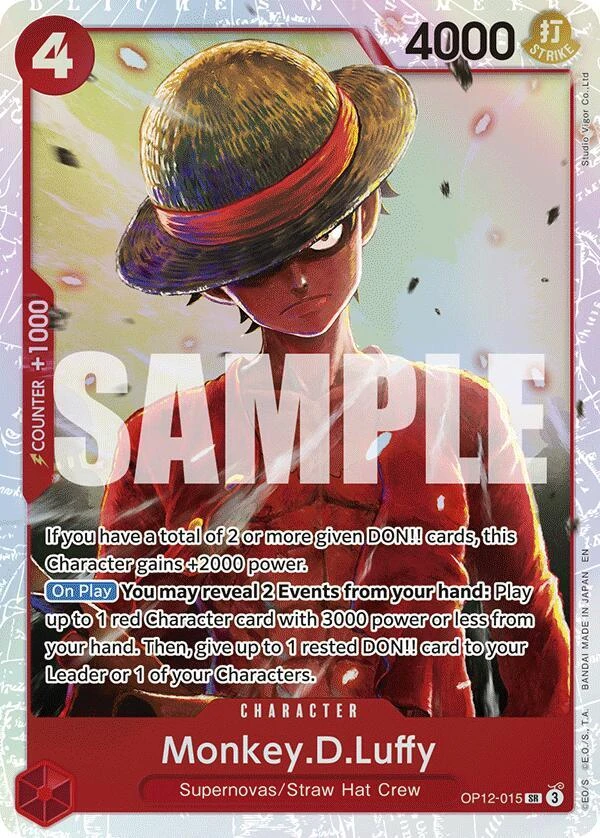
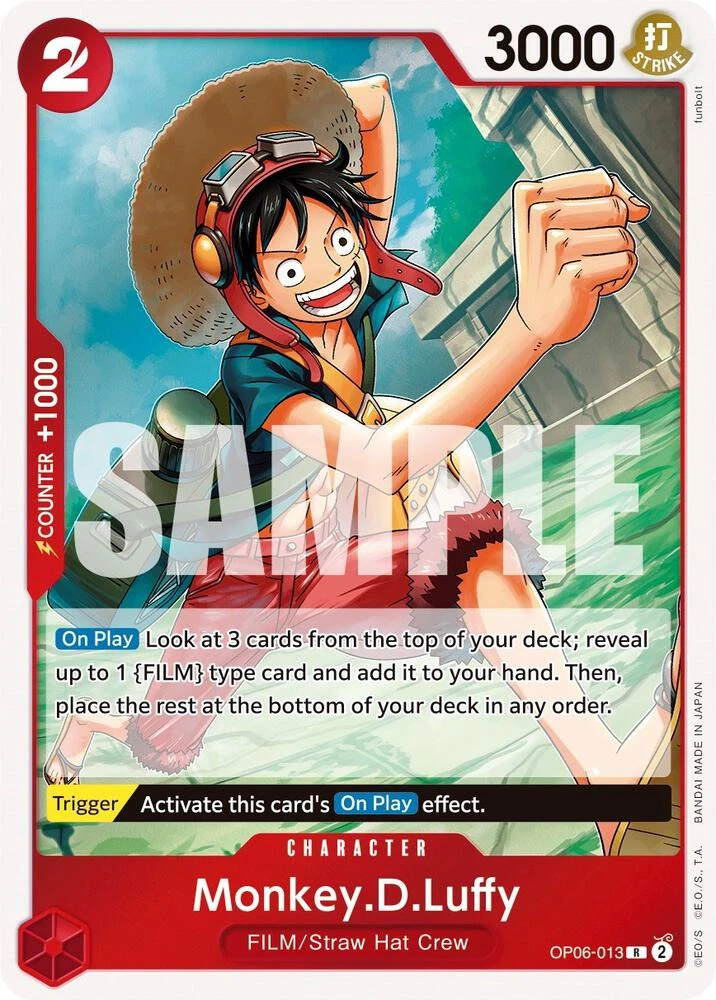
In order to play the One Piece TCG, you'll need your chosen Leader card, 50 other cards that share a color with them, and a DON!! deck of 10 cards. You may include up to four copies of any card with the same set number in your deck, regardless of name, so you'd be allowed to play four copies of Monkey.D.Luffy (OP12-015) and four copies of Monkey.D.Luffy (OP06-013) if you wanted to.
If you'd like to avoid the deckbuilding complexities for now, I'd encourage you to pick up some of One Piece's many Starter Deck products. They're built to play straight out of the box and serve as the perfect onboarding platform for any group of new players.
How to Play the One Piece TCG
Once you've got your game pieces ready to go, it's time to play your first game! Decide which player is going first through a random method of your choice, then shuffle up and draw five cards from the top of your deck. This is your opening hand.
...well, it might be.
If you don't like the five cards you see, you're allowed to take a full mulligan. Return all the cards in your hand to the deck, shuffle up and draw five new cards. You're only allowed to do this once, so think carefully before you choose to do so. You're stuck with whatever you get next time!
Once you have your opening hand, take an additional number of cards from the top of your deck equal to your Leader's Life and place them face-down in a vertical pile to the left of your game area. You are not allowed to look at these cards while doing so. This is called your Life area.
Every time your opponent successfully attacks your Leader, you'll take a card from the top of your Life area and add it to your hand.
Phases
Each turn of One Piece is made up of five different phases. You'll follow them from left to right in this exact order as you navigate your turn:
Refresh Phase
The refresh phase is notoriously empty on the first turn of the game but will play an important role in your following turns. Here, you'll return any DON!! cards given to Leaders or Characters to your cost area and reactivate any of your rested cards.
If a card is vertical, it's active. If it's horizontal, it's rested. Rested cards cannot attack, or use abilities that require them to become rested. You should never have any rested cards left in play at the end of a refresh phase unless a secondary effect is causing them to remain so.
Draw Phase
Big shocker here. You'll draw one new card from your deck at the beginning of each of your turns during this phase. If you're going first, you'll skip this draw on turn one to help balance out the power of acting before your opponent.
DON!! Phase
Alright, now we're getting into the real meat and potatoes.
During the DON!! phase, you'll add DON!! cards from your DON!! deck to your cost area. You'll use these cards as resources to pay for your cards and effects during each turn. Each player adds two DON!! to their cost area during each of their respective DON!! phases. If you're going first, you'll only place one DON!! during your first turn before moving on to the typical two for each of your following turns. Much like skipping a draw, this helps to keep both players at parity and enables some interesting deck-building choices around differently costed cards.
Main Phase
The main phase is where all the action takes place. You'll do everything from playing cards in your hand to attacking with your Leader or Characters. There is no forced order of operations here: if it can normally be done during your main phase, you can do so at any point during your main phase, as long as you aren't currently doing something else.
To play a Character card, Event card, or Stage card, you'll need to rest the required number of DON!! displayed in the top left corner. For example, Baby 5 (OP05-034) costs just one DON!! to play, so you'll be able to do so from your very first turn. You may only have five Characters in play at any one time, so you'll need to choose one to trash if you'd prefer to play another at that stage.
If we look a little closer at Baby 5, we'll see it also has an {Activate: Main} effect. These are abilities you can choose to use during the main phase by paying any displayed costs on a Character in play. By spending one DON!! and resting Baby 5, she'll go digging for a {Donquixote Pirates} card within the top five cards of your deck. Simple stuff!
Attacking
Neither player can attack with Leaders or Character during their first turn of the game. Characters also cannot attack immediately after they're played unless they're sporting the Rush keyword. After you've waited through those restrictions, you may declare any attacks you wish during the main phase. You can choose to attack the opposing Leader directly or any of your opponent's rested Characters—just rest your attacker and declare your target.
Look at the power value printed in the top right corner of your attacking card. If the total is equal to or greater than the defender, you'll win the battle. If the attacker has a lower power than their target when damage is calculated, they'll simply bounce off harmlessly.
If a defending Character loses a battle, they'll be trashed. If a Leader loses a battle, they'll take one damage to their Life area instead. Take a card from your Life area and add it to your hand.
If you happen to draw a card with a Trigger effect like Sanji's Pilaf (OP03-056), you may reveal it to use that effect without paying any other costs.
End Phase
All done beating up your opponent? Cool. The end phase serves as a passing of priority and gives each player a final window to take corresponding actions before the opponent begins their turn.
Adding DON!! To Your Cards
DON!! doesn't just pay for your cards or effects: it also grants additional power to your Characters or Leader if attached. You may attach active DON!! cards to either type of card during your main phase, granting them an additional +1000 power for each DON!! attached. This bonus only persists during your turn, and you cannot spend the attached DON!! to pay for anything else.
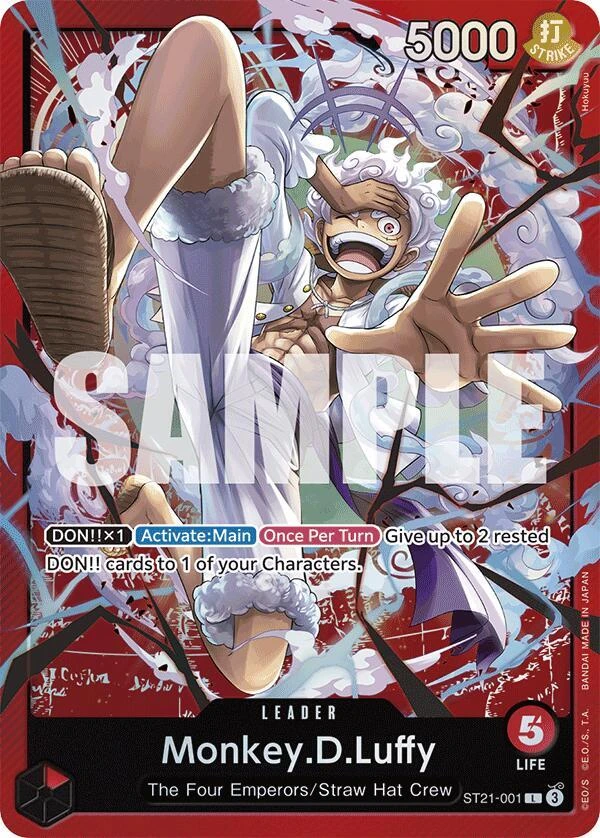
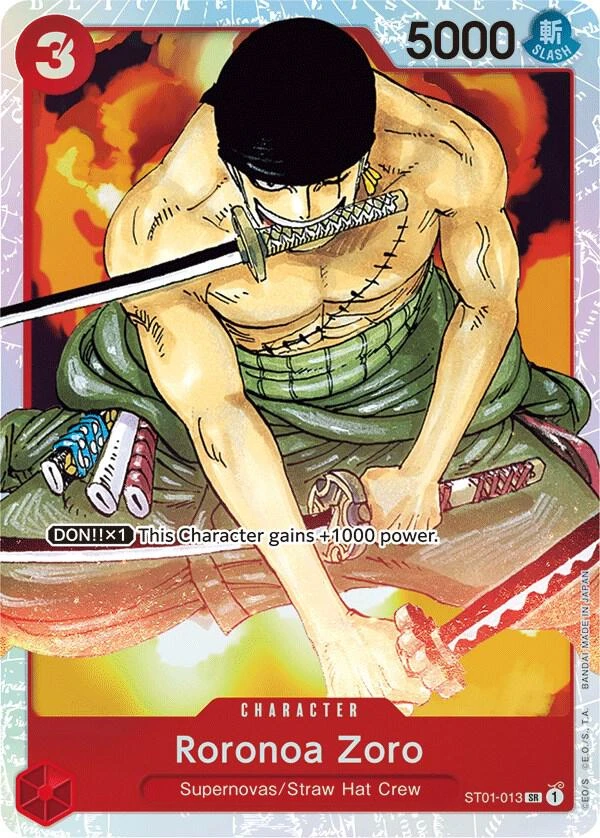
Some Characters and Leaders require DON!! to be attached in order to use their effects, such as Monkey.D.Luffy (ST21-001) or Roronoa Zoro (ST01-013). Keep an eye out for spots where you can do so without playing off curve. Otherwise, DON!! serves as a built-in way to help smaller Characters bust through opposing defenses as bigger threats hit the table.
Blockers
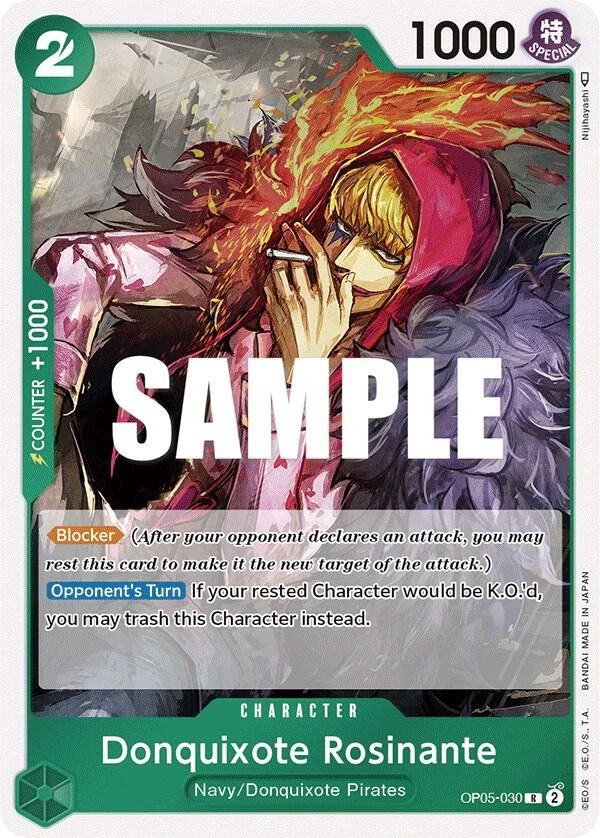
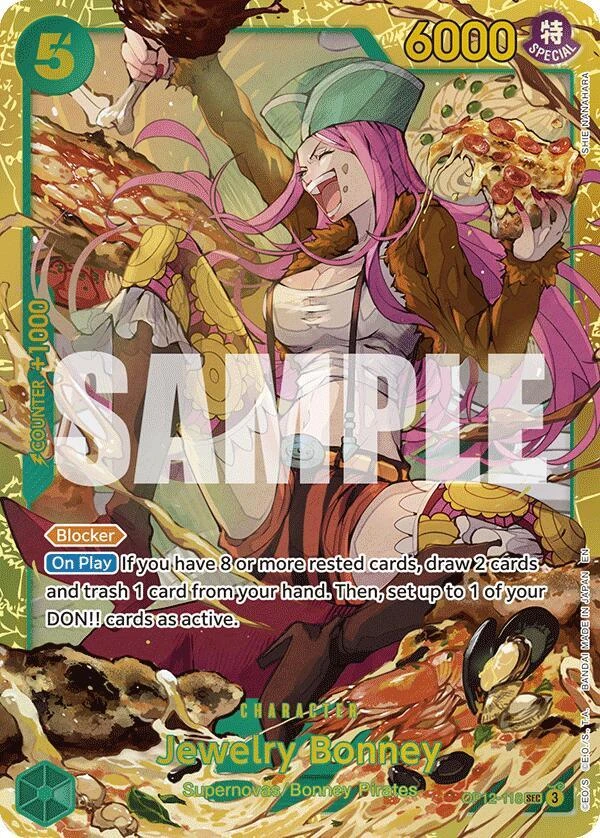
If we simply strapped all our DON!! to our Leader each turn and kept slugging each other, One Piece would be a little bit boring. The counterplay to this is the {Blocker} keyword. When an opponent declares an attack, you may choose to rest a card with {Blocker} to change the target of the incoming attack to that card instead. Compare the power of both cards and resolve the attack accordingly.
Cheap blockers such as Donquixote Rosinante (OP05-030) primarily serve as speed bumps to buy you additional time, but bigger options such as Jewelry Bonney (OP12-118) serve more like a roadblock. You'll get more familiar with the nuances of {Blocker} Characters as you dive deeper into the game.
Counters
Much like blockers, counter cards provide modality in your deckbuilding that can prevent your Leader from getting slapped around. You'll notice that Character cards such as Uso-Hachi (ST18-001) have a small colored bar on the left-hand side of the card with a counter value inside. Whenever one of your cards is attacked, you may choose to discard any number of counter cards from your hand to grant that much additional power to your target, turning the tide of the battle long after the opponent could suit up extra DON!! to increase their prowess. Suddenly, it becomes very important to weigh up how many +2000 counters your opponent may be holding when you're scrapping to steal that final hit on their Leader.
Non-Character cards may also have a counter value, such as Gum Gum Giant (OP09-078). These powerful effects will often require additional costs to be paid but create spectacular blowout moments in exchange. They'll typically counter for a much higher amount to make up for their lack of flexibility. Together, these cards create a dynamic gameplay experience that rewards players for best understanding how to use their DON!! each turn.
Closing Thoughts
That's quite a lot to chew on, so don't be afraid to take things at your own pace and revisit this article as the cogs come together. One Piece is a complex little card game that really softens up once the basics have stuck with you. More importantly, it's a whole ton of fun for both card game veterans and anime enjoyers alike. If you're more of a visual learner, there's also a snazzy little video tutorial on the official One Piece YouTube channel to help bolster your knowledge.
Have further questions? Let me know over at @HowlingMines on X (formerly Twitter) or @howlingmines.com over on Bluesky! Alternatively, give my other work here on TCGplayer a peek if you'd like another slice of everything nice about your favorite game.
But until next time. I've been HowlingMines, you've been amazing!
Stay safe out there—and happy gaming!